Chaga vs Reishi: Which Mushroom Is Better for Your Health?
Home -
Blog
Table of Contents
Urban Roots Farms
If you’ve been searching for the right functional mushroom, you’re not alone — chaga and reishi consistently top the list of the most researched medicinal mushrooms available today. Each mushroom species brings its own distinct nutrient profile to the table — and while chaga and reishi share foundational compounds like beta-glucans and polysaccharides, knowing what sets each one apart can help you choose the right fit for your wellness routine. Whether your goal is stronger immunity, better sleep, or less stress, the deep dive below covers everything you need to make a confident, informed choice.
Key Chaga vs. Reishi Insights You Need to Know
Chaga leads on antioxidants — among many medicinal mushrooms, chaga (Inonotus obliquus) has the highest polyphenolic content and the highest antioxidant activity.
Reishi leads on stress & sleep — reishi is celebrated for its potent adaptogenic properties; adaptogens are natural substances that help your body maintain balance amid biological and environmental stressors.
Complementary immune support — both chaga and reishi are rich in beta-glucans, working through overlapping pathways to stimulate white blood cell activity and reinforce immune function.
Synergistic by nature — though each mushroom has its own distinct strengths, chaga and reishi complement each other well, making them a natural pairing for broad-spectrum wellness support.
Timing your intake matters — chaga integrates naturally into a morning routine, while reishi is best taken in the evening to align with the body’s overnight recovery cycle.
Quality and form make a difference — prioritize fruiting body extracts with quantified beta-glucans, hot-water or dual extraction, and third-party testing.
What Are Chaga and Reishi Mushrooms?
Dubbed the king and queen of mushrooms, chaga and reishi have been revered in traditional Chinese medicine for thousands of years — and modern research is catching up, revealing the many ways these two fungi support immunity, stress resilience, sleep, beauty, and more. Here’s what sets them apart:
Chaga (Inonotus obliquus) — grows on birch trees in cold climates, found in the northern United States, parts of China, and northern Europe.
Reishi (Ganoderma lucidum) — grows on dead trees around the world, preferring hot and humid climates, and displays a bright red, orange, or brown color.
Shared role — both are adaptogenic fungi with rich bioactive compounds like beta-glucans and polysaccharides; each is suited to distinct health goals.
Understanding the unique nutrient profile of each species is the first step toward finding the best ones to incorporate into your wellness routine.
The Health Benefits of Chaga Mushrooms
Antioxidant Powerhouse Properties
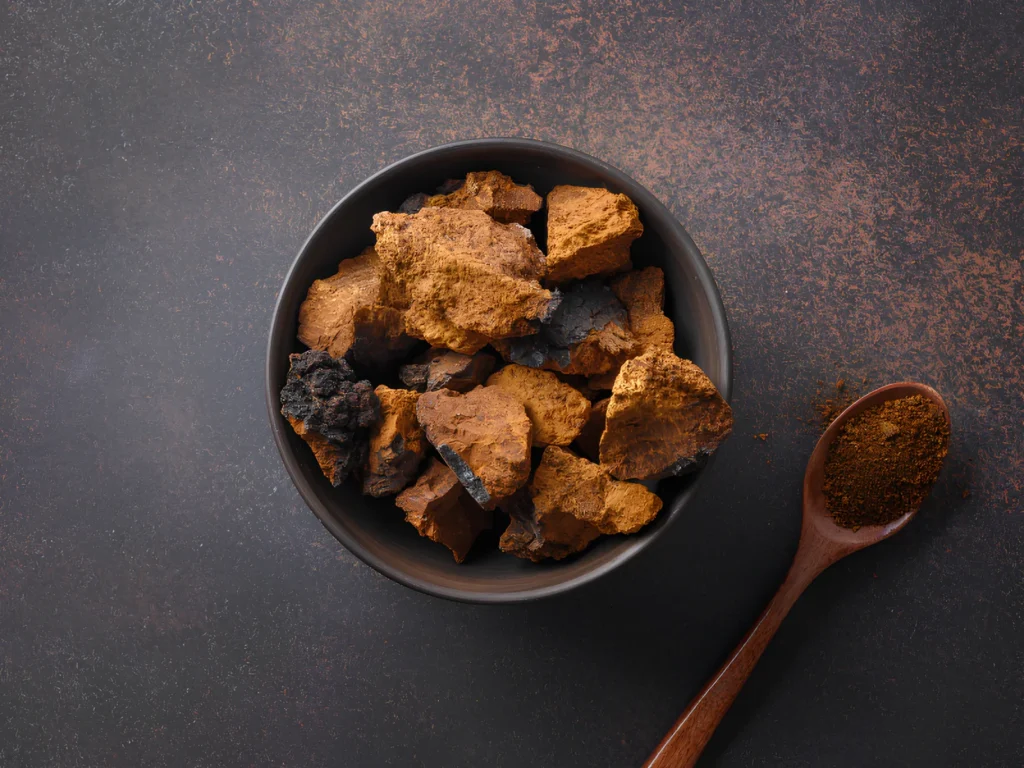
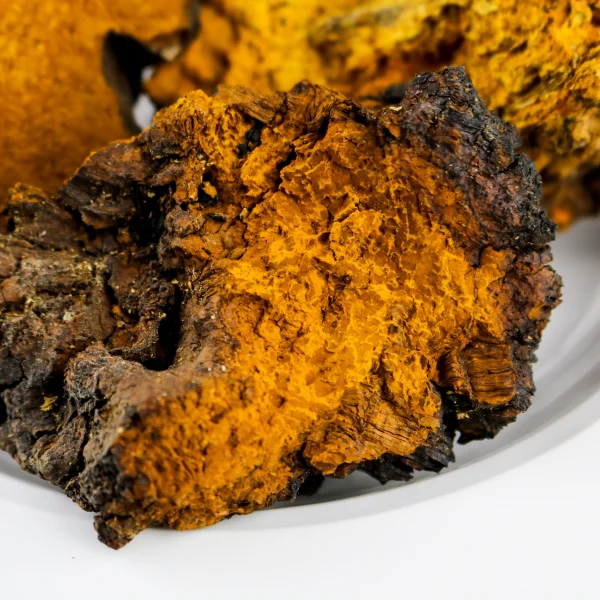
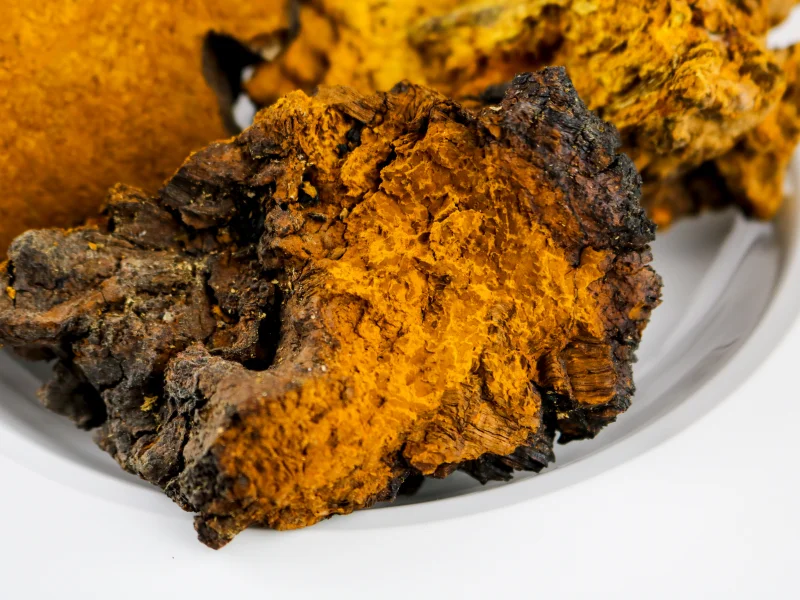
Dark and rugged in appearance, chaga is exceptionally rich in antioxidants that neutralize free radicals and combat oxidative stress. Key antioxidant highlights include:
Polyphenols — help mitigate oxidative stress damage and keep your skin’s natural glow well into your senior years.
Melanin and betulinic acid — compounds unique to birch-hosted chaga that contribute to its exceptional antioxidant activity.
High polyphenolic content — among many medicinal mushrooms, chaga has the highest polyphenolic content and the highest antioxidant activity.
Immune System Support and Anti-Inflammatory Effects
Chaga’s immune-supporting benefits stem from bioactive compounds that work across multiple pathways:
White blood cell production — can support the body’s production of white blood cells, which fight off infection and keep us feeling healthy and energized.
Anti-inflammatory action — these fungi stimulate white blood cells critical to fighting off infections and may help support the immune system by suppressing markers that trigger chronic inflammation.
Sustained immune support — taken daily, chaga’s beta-glucans build and reinforce immune function over time rather than delivering a one-time boost.
The Health Benefits of Reishi Mushrooms
Stress Management and Sleep Quality
Reishi is celebrated for its adaptogenic properties — helping your body maintain balance amid biological and environmental stressors by interacting with the hypothalamic, pituitary, and adrenal glands. Its hepatoprotective effects align with the body’s overnight liver detoxification cycle, making it ideal for the evening.
Liver Health and Detoxification Support
Reishi offers a range of benefits that extend well beyond the liver:
Stress and cognitive support — may help reduce stress-induced brain fog, enhance memory, and support the nervous and digestive systems.
Adaptogenic hormone balance — as an adaptogen, reishi helps regulate stress hormones and support healthy metabolic function.
Fatigue and mood — studies link reishi to reduced fatigue, lower anxiety, and improved mood.
Chaga vs Reishi: Key Differences in Health Benefits
Here’s how their core strengths break down:
Chaga excels at antioxidant protection, immune support, and skin health. When grown on birch, it uniquely absorbs betulinic acid and betulin from the bark — beneficial compounds not found in chaga grown under other conditions.
Reishi is the stronger choice for stress resilience, sleep, and liver health. Its kidney- or fan-shaped, orange-red fruiting bodies are rich in triterpenoids, polysaccharides, and peptidoglycans — key drivers of its immune support.
Shared benefits: Both mushrooms provide antioxidant support, can encourage immune system health, and may even support healthy blood sugar.
Can You Take Chaga and Reishi Together?
The short answer is yes — and the science supports it. The truth is, mushrooms are more powerful when you combine them, as they have a synergistic effect — the beneficial compounds in each fungus support each other inside your body. Reishi contains triterpenes, which studies have shown can support a healthier immune response, while chaga adds unmatched antioxidant defense. As with any supplement, starting at recommended doses and consulting a healthcare provider ensures the safest experience.
Choosing the Right Medicinal Mushroom for Your Needs
Choose chaga if your primary goals involve antioxidant defense, immune support, or skin vitality.
Choose reishi if stress, poor sleep, or inflammation are your main concerns.
Consider both if you want comprehensive, whole-body support — and look for high-quality products with quantified beta-glucans and third-party testing.
TrueMyco: The Best of Both Worlds
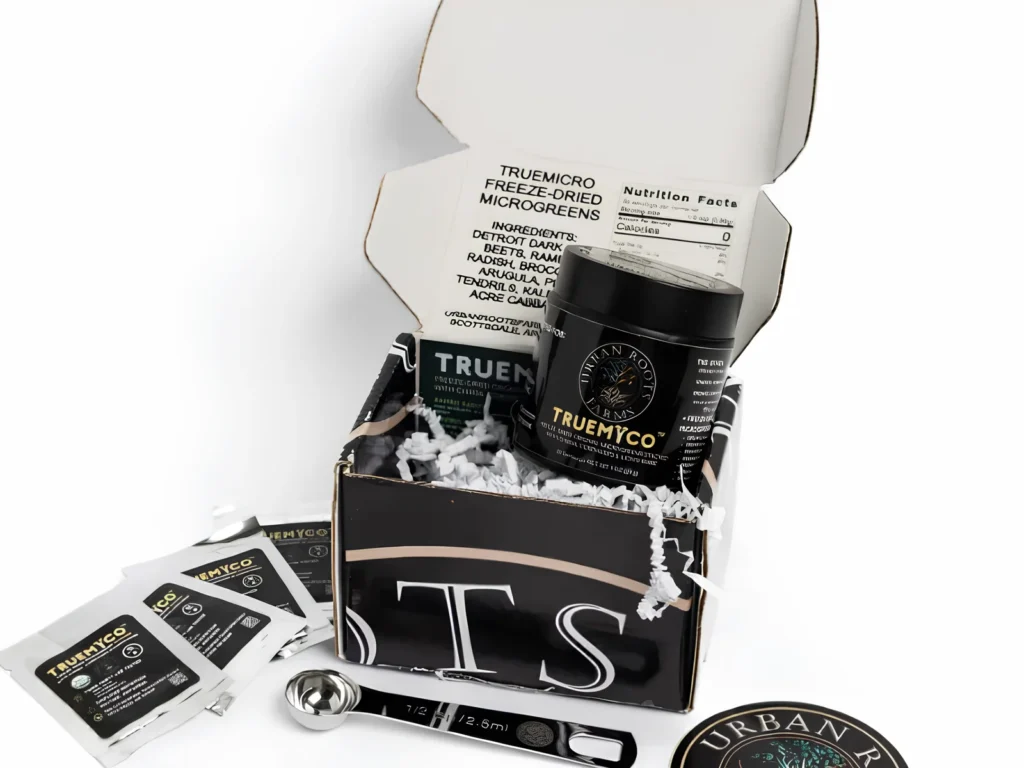
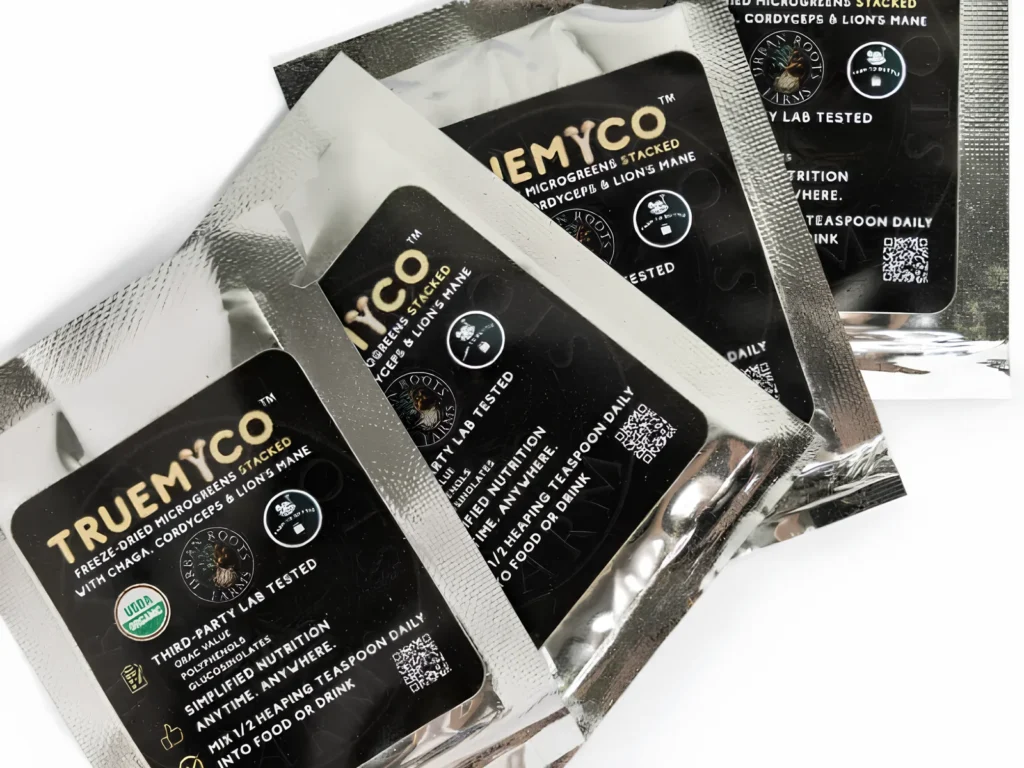
You don’t have to choose between chaga and reishi — our TrueMyco line was built for those who want the full spectrum of functional mushroom support in one convenient, farm-crafted formula. Here’s what sets it apart:
Why TrueMyco Outperforms Single Mushroom Powders
Single-mushroom supplements give you one piece of the puzzle — TrueMyco gives you the whole picture:
Dual-mushroom synergy — pairs chaga’s antioxidant and immune-supporting bioactive compounds with reishi’s adaptogenic triterpenoids to address multiple health pathways simultaneously.
Precision freeze-drying — flash-freezes ingredients at their nutritional peak, then removes moisture through sublimation, retaining 98% of the original nutrients, including heat-sensitive compounds destroyed by conventional processing.
Microgreen amplification — the addition of nutrient-dense, freeze-dried microgreens broadens the vitamin, phytochemical, and antioxidant profile beyond what mushroom-only powders can deliver.
TrueMyco combines everything both mushrooms do best into a single, clean daily formula.
How to Incorporate Medicinal Mushrooms Into Your Daily Routine
Morning: Add a scoop to your coffee, smoothie, or yogurt for a clean, functional start.
Evening: Mix into warm water or herbal tea to support sleep and overnight liver function.
On the go: Our single-serve packet format means you stay consistent regardless of your schedule.
Making the Smart Choice for Your Health Journey
Both mushrooms are exceptional — and they work even better together. Whether you start with a Truemyco Monthly Jar or stock up with the Truemyco Family Pack, TrueMyco delivers chaga’s antioxidant firepower, reishi’s adaptogenic calm, and the nutrient-amplifying benefits of freeze-dried microgreens in one clean formula. Explore the full collection at Urban Roots Farms and take a confident step toward lasting, functional health.
Neither is universally “better” — the right choice depends entirely on your health goals. Reishi leans toward cognitive and stress support, while chaga plays a more protective role — bolstering the immune system and defending against oxidative damage. If antioxidant defense and immune resilience are your priorities, chaga is your ally. If stress management, restful sleep, or liver health tops your list, reishi is the stronger fit.
Does chaga give you a buzz?
Chaga does not provide stimulant effects like caffeine. Traditional Chinese Medicine herbalists and Indigenous people in North America have long utilized chaga for its immune-supporting properties, and it is known to balance energy levels, alleviate fatigue, and enhance mental sharpness — not through stimulation, but through sustained cellular support and improved nutrient absorption. You can take chaga any time of day without worrying about disrupted sleep.
Is reishi good for nerve damage?
Research suggests reishi may help reduce stress-induced brain fog, enhance memory, and support the nervous and digestive systems. While these findings are promising, reishi’s neuroprotective potential is still being studied, and the existing data largely come from in vitro and animal models. Anyone managing serious neurological conditions should consult a qualified healthcare provider before adding reishi or any medicinal mushroom to their regimen.
This content is for informational purposes only and is not intended to diagnose, treat, cure, or prevent any disease. Always consult your healthcare provider.